
 English
 Español
 Pусский
 Tiếng Việt

Robot Bersama
Joint Robot: A Comprehensive Overview A joint robot, also known as an articulated robot, is a highly versatile and widely used type of industrial robot characterized by its multiple rotary joints, which enable precise and flexible movements. These robots are designed to perform complex tasks in various industries, including manufacturing, assembly, welding, material handling, and even medical applications. Their ability to mimic human arm movements makes them indispensable in automation. Structure and Design A typical joint robot consists of several key components: 1. Base: The fixed part of the robot that provides stability. 2. Articulated Arms: Multiple interconnected segments (links) connected by rotary joints, allowing a wide range of motion. 3. End-Effector: The tool or gripper attached to the robot’s arm, customized for specific tasks like welding, painting, or picking objects. 4. Controller: The "brain" of the robot, which processes commands and ensures accurate movement. The number of joints (degrees of freedom) varies, with common configurations ranging from 4 to 6 axes. Six-axis robots offer the highest flexibility, enabling movement in all directions, including rotation and bending. Key Advantages - High Precision: Joint robots can perform repetitive tasks with micron-level accuracy. - Flexibility: Their multi-joint design allows them to reach confined spaces and adjust to complex paths. - Speed and Efficiency: They significantly improve production speed while maintaining consistency. - Programmability: Operators can easily reprogram them for different tasks, reducing downtime. Applications - Manufacturing: Used in assembly lines for tasks like screwing, drilling, and part placement. - Welding: Capable of performing arc and spot welding with high repeatability. - Packaging: Efficiently handles sorting, palletizing, and labeling. - Medical: Assists in surgeries and laboratory automation due to their precision. Future Trends Advancements in AI and machine learning are enhancing joint robots' capabilities, enabling them to adapt to dynamic environments. Collaborative robots (cobots) are also emerging, allowing safe human-robot interaction. In summary, joint robots are a cornerstone of modern automation, offering unmatched precision, adaptability, and efficiency across industries. Their continued evolution promises even greater contributions to smart manufacturing and beyond.
Produk
Kategori:
-
Manipulator Rangka Multi-Sumbu Otomatis
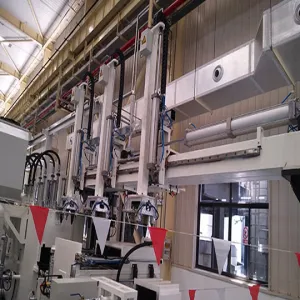
Klasifikasi mereka: Manipulator RangkaTampilan: 36Nomor:Waktu rilis: 2025-12-18 16:01:41Manipulator Rangka Multi-Sumbu Otomatis adalah solusi mutakhir untuk aplikasi industri dan konstruksi, yang dirancang untuk menangani, mengangkat, dan memposisikan rangka besar dengan presisi dan efisiensi. Dilengkapi dengan beberapa sumbu pergerakan, aktuator penggerak servo canggih, dan sensor terintegrasi, ini memastikan penyelarasan yang akurat dan pengoperasian yang aman untuk komponen struktur berat. Desainnya yang kokoh dan sistem kontrol yang dapat diprogram memungkinkan penanganan rakitan rangka yang kompleks dengan lancar, mengurangi biaya tenaga kerja, dan meningkatkan produktivitas alur kerja. Ideal untuk gudang, pabrik, dan lokasi konstruksi skala besar, manipulator ini meningkatkan efisiensi operasional, memastikan kualitas yang konsisten, dan memenuhi tuntutan ketat proyek konstruksi industri modern.
Berita
Kategori:
Tidak ada hasil pencarian!
Kasus
Kategori:
Tidak ada hasil pencarian!
Video
Kategori:
Tidak ada hasil pencarian!
Download
Kategori:
Tidak ada hasil pencarian!
Rekrutmen
Kategori:
Tidak ada hasil pencarian!
Produk yang direkomendasikan
Tidak ada hasil pencarian!



 Telepon